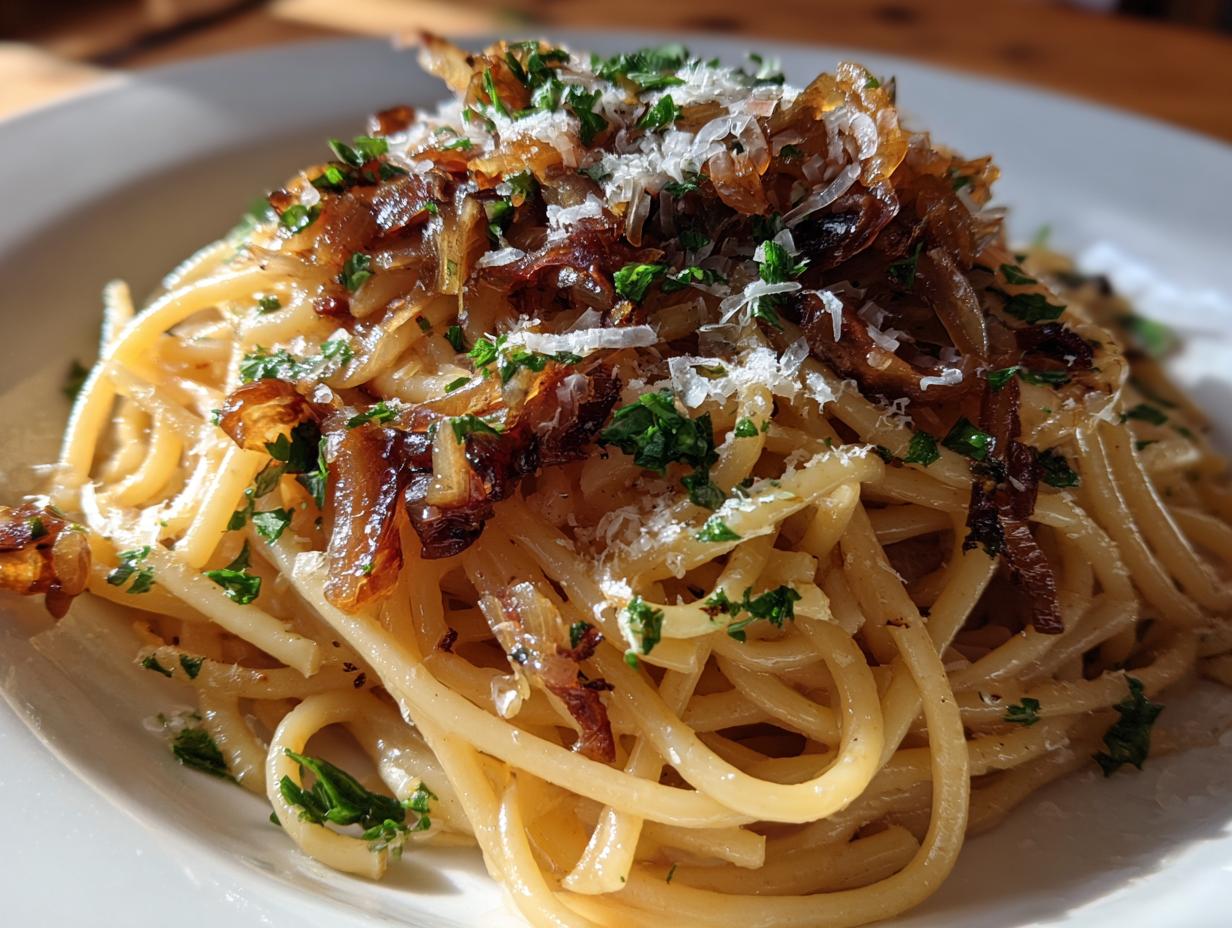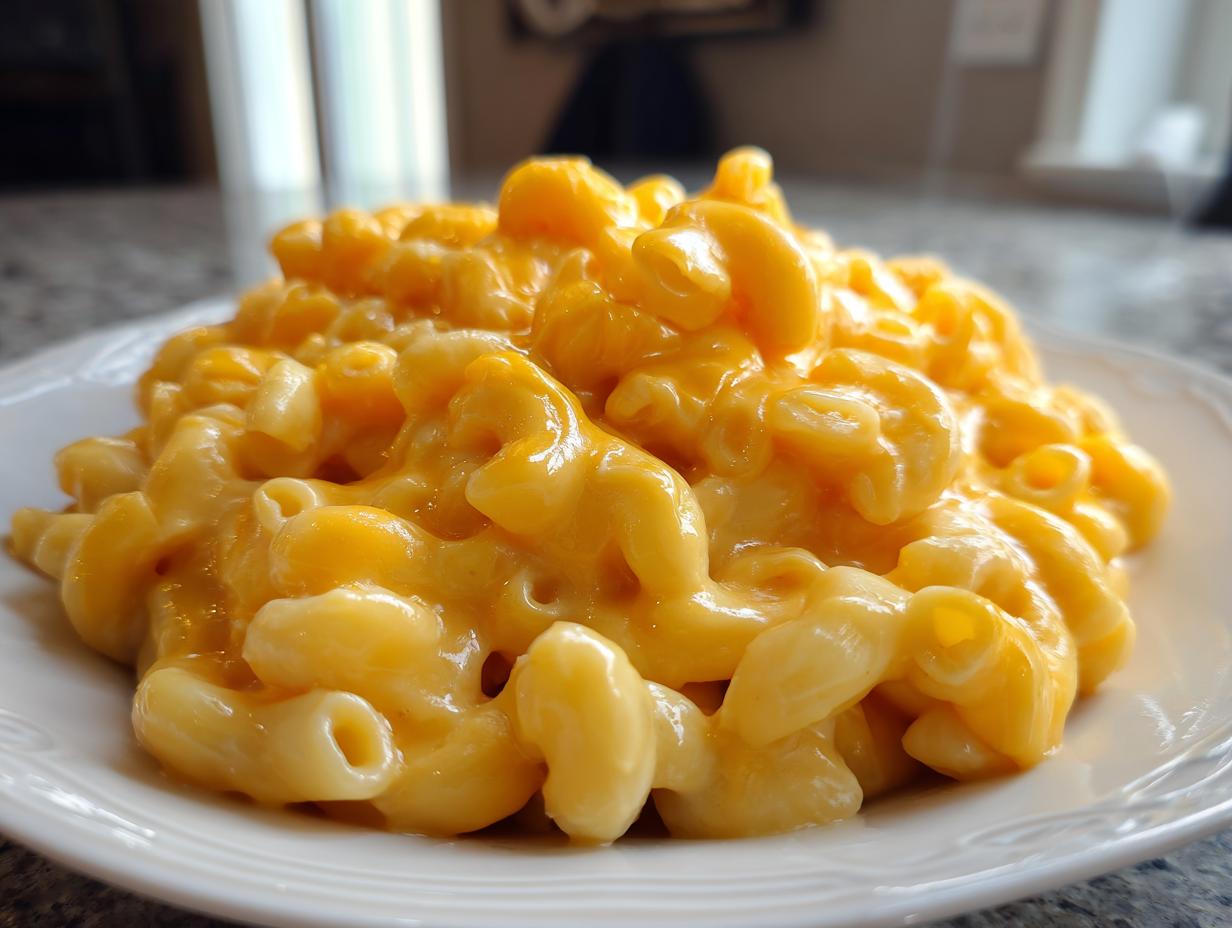

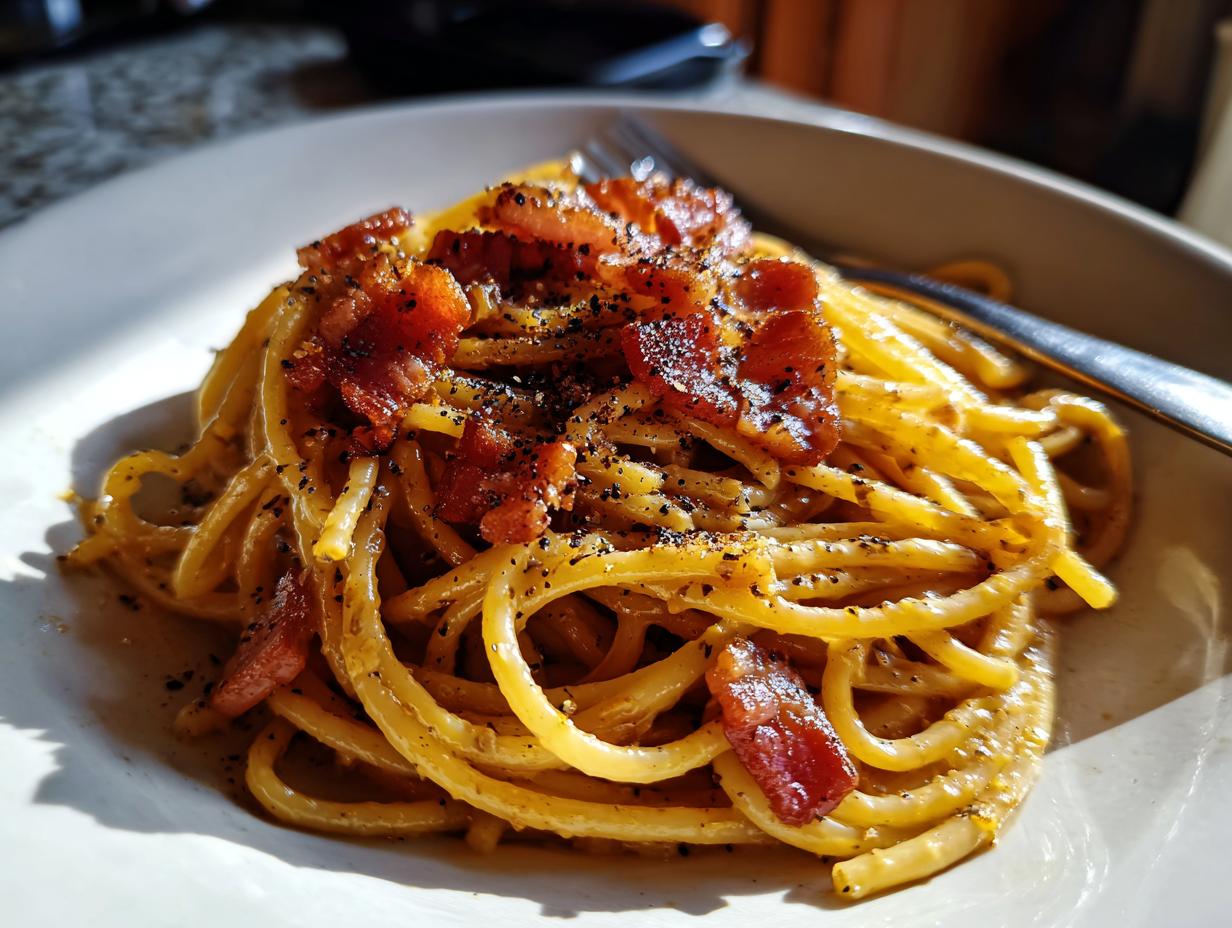
I still remember my first bite of spaghetti alla gricia in a tiny Roman trattoria – that perfect moment when crispy guanciale fat melted on my tongue and sharp pecorino clung to every strand of pasta. The chef laughed as I practically licked my plate clean, then leaned in and whispered, “The secret? Only four ingredients and 20 minutes.” That’s when I fell in love with this humble Roman classic. Unlike its creamy carbonara cousin, spaghetti alla gricia is all about bold simplicity – just golden pork, salty cheese, and black pepper dancing in perfect harmony. No fuss, no fancy techniques, just pure magic in a bowl that tastes like sunshine on the cobblestones of Testaccio.
Why You’ll Love This Spaghetti alla Gricia
Once you try this Roman classic, you’ll understand why it’s been a staple for generations. Here’s what makes spaghetti alla gricia so special:
- Lightning fast: From pantry to plate in 20 minutes flat – perfect for those “I’m starving NOW” evenings.
- Minimalist magic: Just four humble ingredients transform into something greater than the sum of their parts (take that, complicated recipes!).
- Texture heaven: The crispy chew of guanciale against silky pasta coated in pecorino is my definition of comfort food perfection.
- Roman street cred: When you nail this dish, you’re tasting the exact same flavors they serve in Testaccio’s best trattorias.
Honestly? It’s become my weekly “I deserve something amazing” meal – and once you try it, I bet it’ll be yours too.
Ingredients for Spaghetti alla Gricia
Here’s the beautiful simplicity of spaghetti alla gricia – just four powerhouse ingredients that create magic together:
- 400g spaghetti (trust me, weight matters here – it’s about the perfect sauce-to-pasta ratio)
- 200g guanciale, diced into 1cm cubes (more on why this pork jowl is non-negotiable below)
- 150g pecorino romano, finely grated (none of that pre-shredded stuff – we need it to melt like snow)
- Freshly ground black pepper to taste (I’m talking freshly cracked – your pepper mill will get a workout)
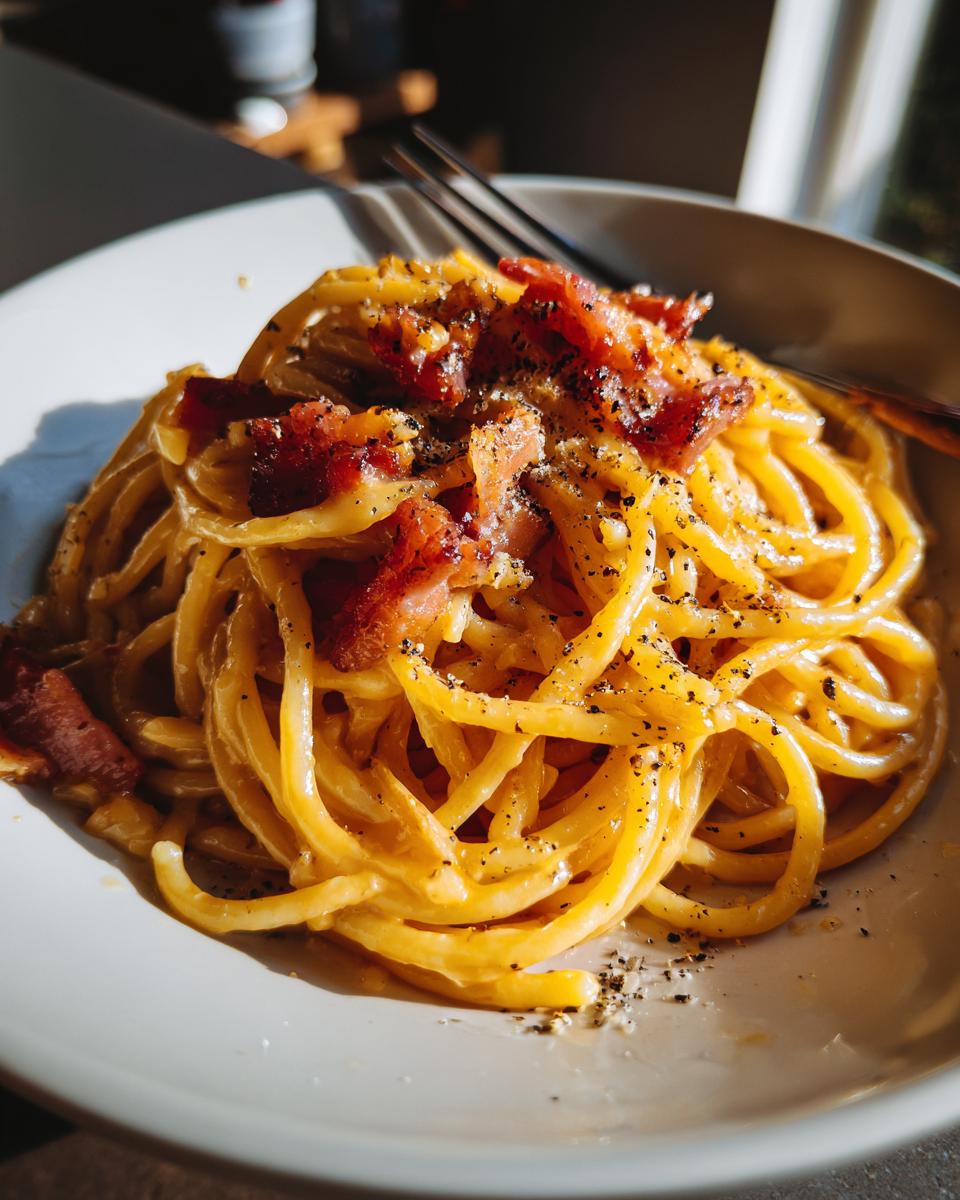
Now about that guanciale – yes, pancetta works, but guanciale’s the real MVP here. Its fat renders differently, creating these incredible crispy-chewy bits while leaving behind the most flavorful golden pork fat imaginable. Specialty Italian markets usually carry it, or ask your butcher to order some (tell them it’s for authentic spaghetti alla gricia – they’ll understand).
Pro tip: Buy extra pecorino! You’ll inevitably snack on it while grating – I always “accidentally” need to grate another handful halfway through cooking.
Equipment Needed
One of the best things about spaghetti alla gricia? You probably already have everything you need in your kitchen. Here’s my go-to lineup:
- Large pot: For cooking the pasta – I use my trusty 6-quart one because the spaghetti needs room to dance
- Slotted spoon: To fish out that precious guanciale once it’s perfectly crispy
- Heavy frying pan: A good 12-inch skillet distributes heat evenly for rendering that pork fat just right
- Tongs: My kitchen MVP for tossing pasta like a Roman nonna
- Measuring cups: Eyeballing works, but precision helps nail the perfect sauce consistency
- Microplane grater: Creates pecorino snowflakes that melt instantly into the pasta
That’s it! No fancy gadgets – just solid basics that let the ingredients shine.
How to Make Spaghetti alla Gricia
Now for the fun part – let’s turn these simple ingredients into Roman magic! Follow these steps closely, and you’ll have restaurant-quality spaghetti alla gricia in no time.
Step 1: Cook the Pasta
Fill your largest pot with water (about 4 quarts) and bring it to a rolling boil. Here’s where most people go wrong – don’t be shy with the salt! I use 2 tablespoons of kosher salt (about 1/4 cup if you’re using table salt). The water should taste like the sea – this seasons the pasta from the inside out.
Add your spaghetti and set a timer for 1 minute less than the package says for al dente. For most brands, that’s about 8 minutes. Trust me, we’ll finish cooking it later with the guanciale fat – undercooking now prevents mushy pasta later.
Step 2: Crisp the Guanciale
While the pasta cooks, heat your frying pan over medium heat (no oil needed – the guanciale brings its own fat to the party). Add those beautiful 1cm cubes and let them sizzle gently. This isn’t a race – we want the fat to render slowly, leaving us with golden crispy bits swimming in liquid gold.
Stir occasionally until the guanciale turns deep golden brown, about 5-7 minutes. When it looks like little porky jewels and smells irresistible, use your slotted spoon to remove the crispy bits to a plate, leaving all that glorious fat in the pan.
Step 3: Combine Pasta and Guanciale
Here’s where the magic happens! Before draining your pasta, reserve at least 1 cup of that starchy cooking water – this is our secret sauce ingredient. Drain the spaghetti, then immediately add it to the pan with the guanciale fat.
Toss vigorously with tongs, adding splashes of reserved pasta water as needed. The starch helps create that creamy emulsion that coats every strand. Keep tossing until the pasta looks glossy and delicious – about 1-2 minutes.
Step 4: Finish with Pecorino and Pepper
Now take the pan off the heat – this is crucial! If the pan’s too hot, the pecorino will clump instead of melting into creamy perfection. Add about 3/4 of your grated cheese and a generous amount of freshly cracked black pepper.
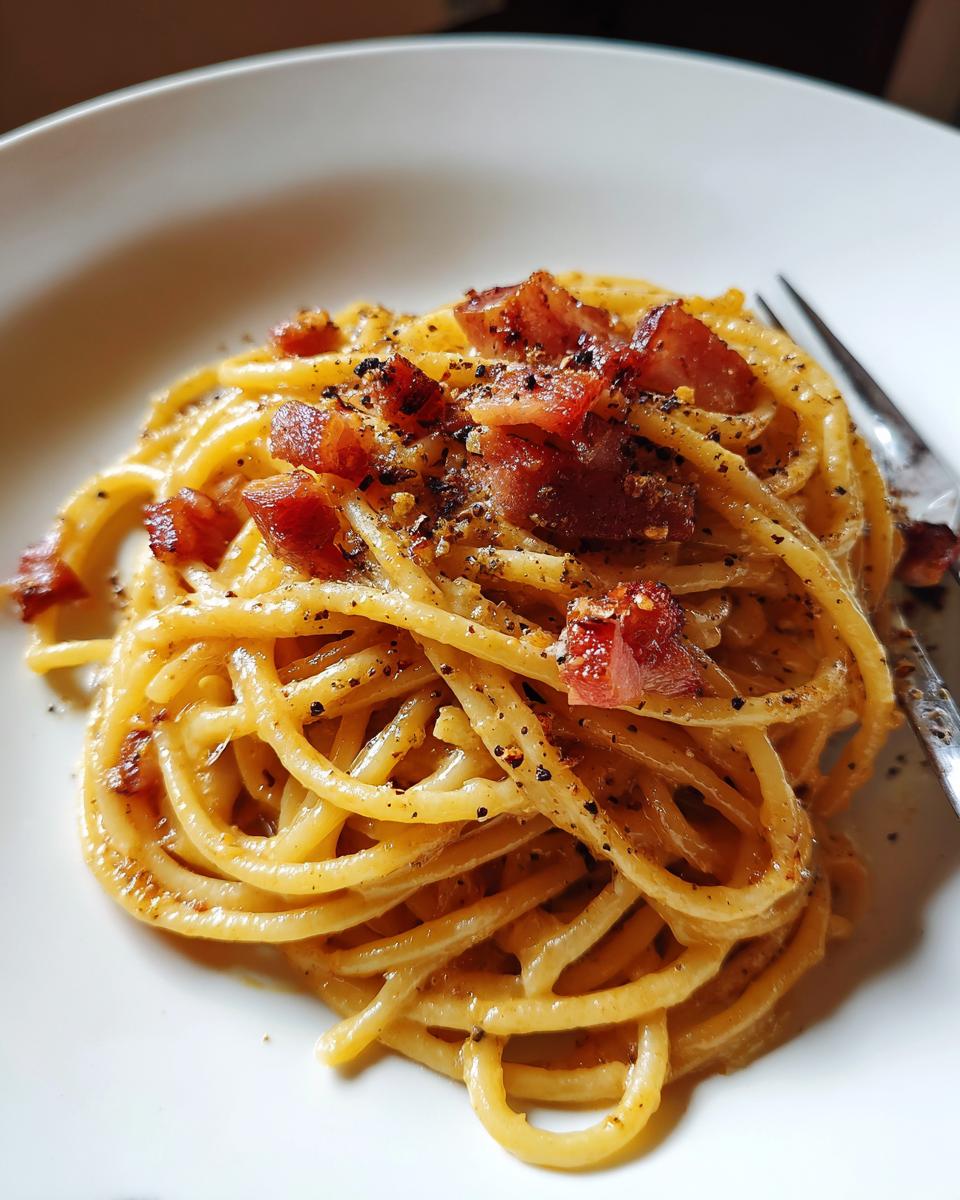
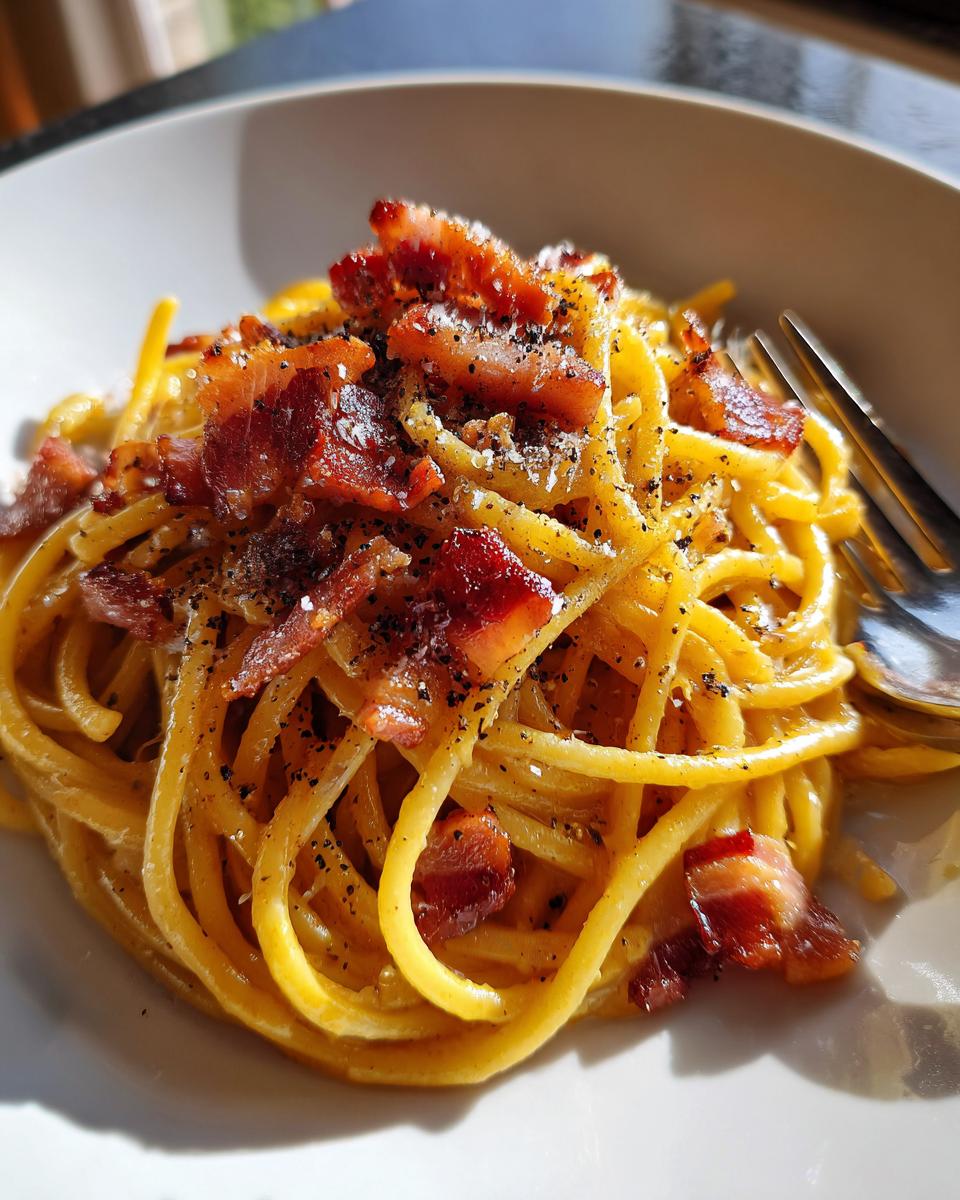
Toss again, adding more pasta water if needed, until you’ve got a creamy, cheesy sauce clinging to every strand. Taste and adjust seasoning – the guanciale and pecorino are salty, so you probably won’t need extra salt. Top with the reserved crispy guanciale bits and remaining cheese.
Serve immediately – this dish waits for no one!
Tips for Perfect Spaghetti alla Gricia
After making this dish dozens of times (okay, maybe hundreds), I’ve picked up some game-changing tricks for spaghetti alla gricia that’ll make you feel like a Roman chef:
- Pasta water is liquid gold: That cloudy, starchy water isn’t just for boiling – it’s the magic glue that helps the cheese and fat emulsify into a creamy sauce. I always keep an extra 1/2 cup reserved, just in case.
- Cheese matters: Use a microplane to grate your pecorino into fine snowflakes – big shreds won’t melt properly. And for heaven’s sake, use the real Pecorino Romano, not that pre-grated stuff with anti-caking agents.
- Speed is key: Have everything prepped and ready before you start cooking. Once the pasta’s drained, it’s go time! The residual heat is what makes the sauce come together beautifully.
- Trust the process: When you first add the cheese, it might look like it’s not mixing in – keep tossing! The starch and fat will work their magic if you’re patient.
Remember: great spaghetti alla gricia isn’t about fancy techniques – it’s about respecting these simple ingredients and letting them shine.
Common Questions About Spaghetti alla Gricia
Even though spaghetti alla gricia is beautifully simple, I get asked these same questions constantly. Here are the answers that’ll save you from any kitchen panic:
Can I use pancetta instead of guanciale?
Yes, but it’s like using a cover band instead of the original artist – close, but not quite the same. Guanciale (cured pork jowl) has a richer, more complex flavor and its fat renders differently. That said, pancetta works in a pinch – just expect a slightly leaner result. If you do use it, get the cubed kind, not sliced!
How should I store leftovers?
Honestly? This dish is best fresh. But if you must, store it in an airtight container and reheat gently with a splash of water to bring back the creamy texture. Microwave in 30-second bursts, stirring between each. The guanciale will lose some crispiness, but it’ll still taste amazing.
Any vegan substitutes?
Well… spaghetti alla gricia without guanciale and pecorino is like Rome without cobblestones. But if you’re experimenting, try smoked tofu cubes fried crisp with olive oil and nutritional yeast for a cheese-like punch. It won’t be authentic, but might satisfy the craving!
Why does my cheese clump up?
Ah, the classic spaghetti alla gricia rookie mistake! Always remove the pan from heat before adding pecorino – too much heat makes it seize up. Also, make sure you’re using finely grated cheese (a microplane is perfect) and adding pasta water gradually while tossing vigorously.
Serving Suggestions
Spaghetti alla gricia is a complete meal on its own, but here’s how I love to round out the experience like they do in Rome:
- Peppery arugula salad with lemon and olive oil – the bright crunch cuts through the rich pasta perfectly
- Crusty bread for mopping up every last bit of cheesy-peppery goodness (my nonna would scold you if you left any behind)
- Light Italian red like a young Chianti or Montepulciano – nothing too heavy to compete with those bold flavors
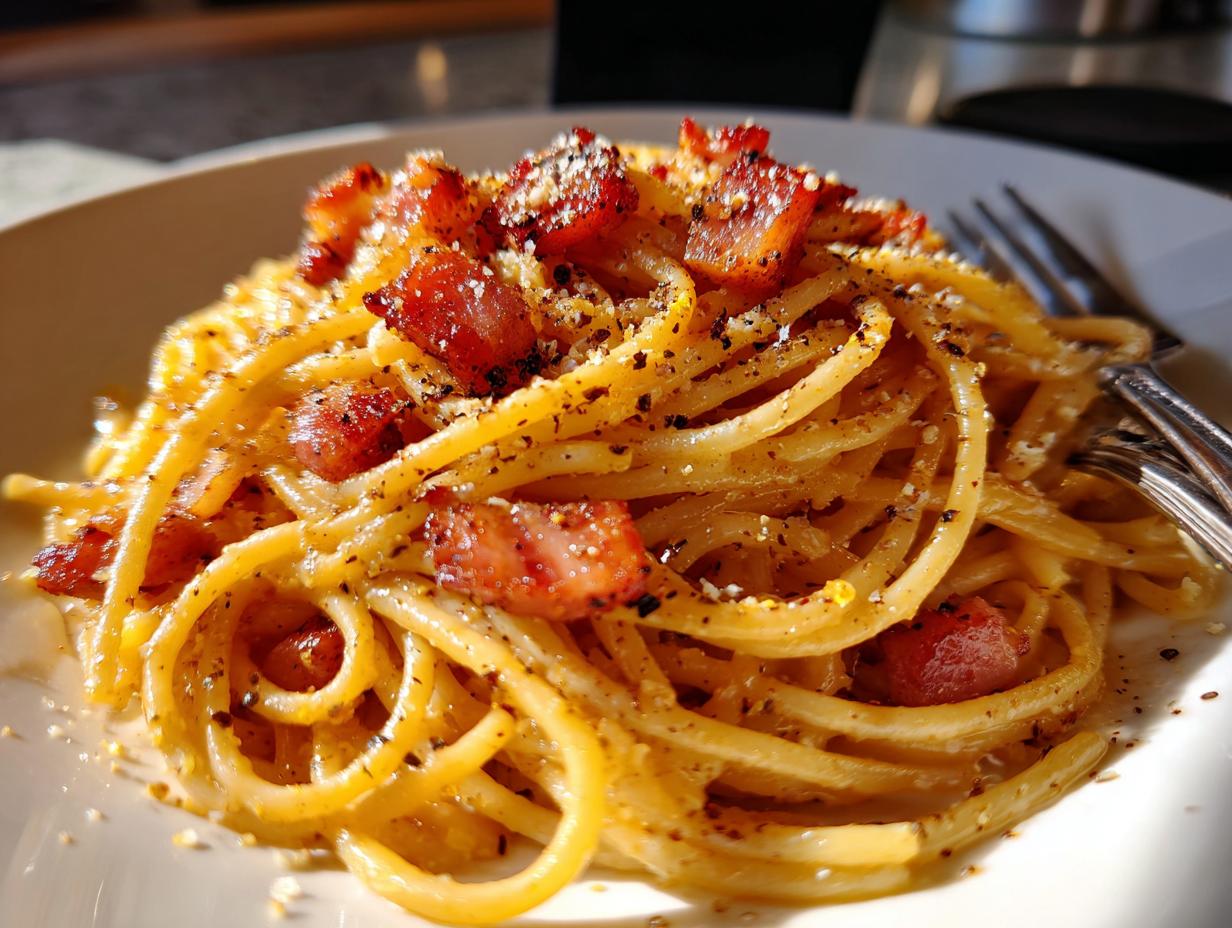
For a true Roman trattoria feel, serve family-style with extra pecorino and a pepper mill at the table. And don’t you dare serve it on plates – shallow bowls are the only way to properly twirl those saucy strands!
Nutritional Information
Here’s the skinny on this not-so-skinny dish (and by skinny, I mean gloriously rich)! Per serving: about 650 calories, 35g fat (12g saturated), 55g carbs, 3g fiber, and 25g protein. Sodium comes in around 800mg – most from that salty pecorino we love so much. These are estimates since guanciale thickness and cheese grating enthusiasm vary. Not diet food, but soul food at its finest!
There you have it – my love letter to spaghetti alla gricia! If this recipe brings you even half the joy it’s brought me over the years, we’ll have done Grandma Rome proud. I’d love to hear how your version turns out – did the guanciale crisp up just right? Did you nearly cry when that first forkful hit your tongue like I did? Leave a note below about your Roman pasta adventures, or better yet, share a photo of your masterpiece (extra points for cheese-dusted lips and a blissed-out expression). Here’s to simple ingredients creating extraordinary meals – may your pecorino always be plentiful and your guanciale forever crispy!
Print
20-Minute Spaghetti alla Gricia Recipe – Irresistible Roman Magic
- Prep Time: 5 minutes
- Cook Time: 15 minutes
- Total Time: 20 minutes
- Yield: 4 servings 1x
- Category: Main Course
- Method: Stovetop
- Cuisine: Italian
- Diet: Low Lactose
Description
A simple Roman pasta dish with crispy guanciale and pecorino cheese.
Ingredients
- 400g spaghetti
- 200g guanciale, diced
- 150g pecorino romano, grated
- Freshly ground black pepper
Instructions
- Bring salted water to boil and cook spaghetti al dente.
- While pasta cooks, fry guanciale until crispy.
- Drain pasta, reserving 1 cup of cooking water.
- Toss pasta with guanciale, adding cooking water as needed.
- Remove from heat, stir in pecorino and black pepper.
- Serve immediately.
Notes
- Guanciale is essential for authentic flavor.
- Pasta water helps create creamy sauce.
- Work quickly when combining ingredients.
Nutrition
- Serving Size: 1 portion
- Calories: 650
- Sugar: 2g
- Sodium: 800mg
- Fat: 35g
- Saturated Fat: 12g
- Unsaturated Fat: 20g
- Trans Fat: 0g
- Carbohydrates: 55g
- Fiber: 3g
- Protein: 25g
- Cholesterol: 75mg
Keywords: spaghetti alla gricia, Roman pasta, guanciale recipe