
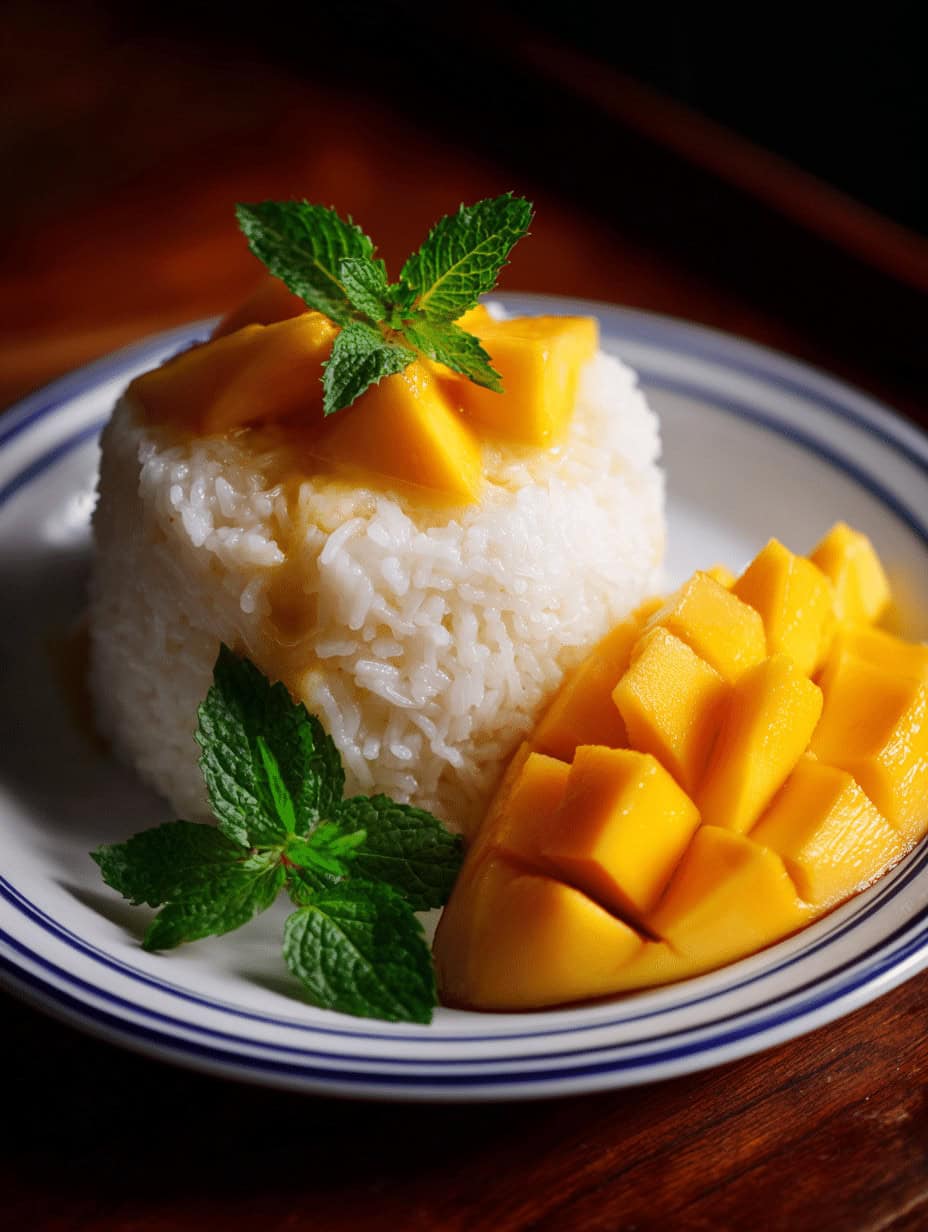
Mango Sticky Rice, known as “Khao Niao Mamuang” in Thai, is Thailand’s most beloved dessert that perfectly balances sweet, creamy, and tropical flavors. This traditional Thai treat combines perfectly cooked glutinous rice with rich coconut sauce and fresh, juicy mango slices. The result is a harmonious blend of textures and tastes that has captivated food lovers worldwide.
Why You’ll Love This Recipe
This authentic Mango Sticky Rice recipe brings the essence of Thai street food directly to your kitchen. The combination of tender, slightly chewy sticky rice infused with aromatic coconut milk creates the perfect base for sweet, ripe mangoes. What makes this dessert truly special is its simplicity – using just a handful of quality ingredients, you can create a restaurant-quality Thai dessert that’s both satisfying and refreshing.
The natural sweetness of ripe mangoes pairs beautifully with the rich, creamy coconut sauce, while the sticky rice provides a delightful textural contrast. This dessert is naturally gluten-free and can easily be made vegan, making it accessible to various dietary preferences. Plus, the vibrant colors make it as visually appealing as it is delicious.
Ingredients You’ll Need
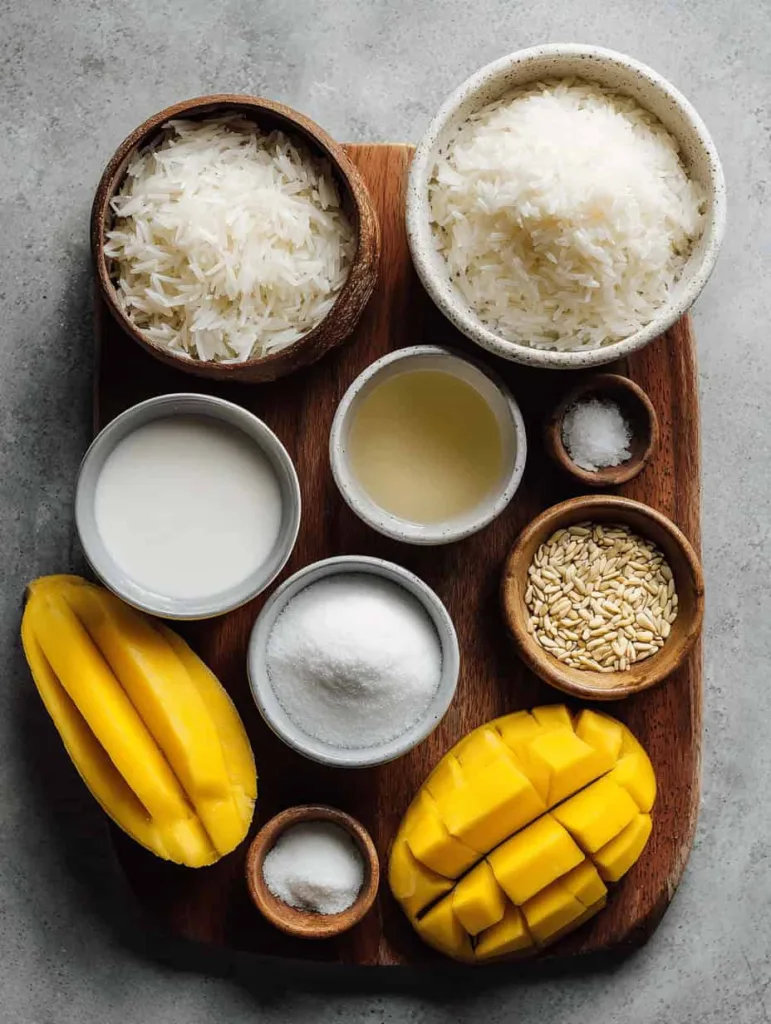
For the Sticky Rice:
- 1 cup Thai sticky rice (glutinous rice)
- Water, for soaking and steaming
For the Coconut Sauce:
- 1 ½ cups full-fat coconut milk
- ⅓ cup granulated sugar
- ¼ teaspoon salt
For the Topping:
- ¼ cup full-fat coconut milk
- ½ teaspoon cornstarch (optional, for thickening)
- Pinch of salt
To Serve:
- 2 ripe mangoes, peeled and sliced
- Toasted sesame seeds or mung beans (optional garnish)
How to Make Mango Sticky Rice
Step-by-Step Instructions:
Step 1: Prepare the Sticky Rice Begin by rinsing the Thai sticky rice under cold water until the water runs clear. Place the rice in a bowl and cover with water by about 2 inches. Allow the rice to soak for at least 4 hours, or preferably overnight. This soaking process is crucial for achieving the perfect texture.
Step 2: Steam the Rice Drain the soaked rice and rinse once more. Line a steamer basket with cheesecloth or a clean kitchen towel. Spread the rice evenly in the lined steamer. Steam the rice over boiling water for 25-30 minutes, until the grains are tender and translucent. The rice should be sticky but not mushy.
Step 3: Make the Coconut Sauce While the rice is steaming, prepare the coconut sauce. In a small saucepan, combine 1 ½ cups coconut milk, sugar, and salt. Heat over medium-low heat, stirring constantly, until the sugar completely dissolves and the mixture begins to simmer. Remove from heat and set aside.
Step 4: Combine Rice and Coconut Sauce Transfer the hot steamed rice to a mixing bowl. Gradually add about ¾ of the coconut sauce to the rice, stirring gently to combine. The rice should absorb most of the liquid while remaining creamy. Cover and let it sit for 15 minutes to allow the flavors to meld.
Step 5: Prepare the Topping For the coconut topping, mix the remaining ¼ cup coconut milk with cornstarch (if using) and a pinch of salt in a small saucepan. Heat gently until slightly thickened, about 2-3 minutes. This creates a glossy finish for your dessert.
Step 6: Prepare the Mangoes Peel the ripe mangoes and slice them into neat pieces. The mangoes should be sweet and fragrant for the best flavor combination.
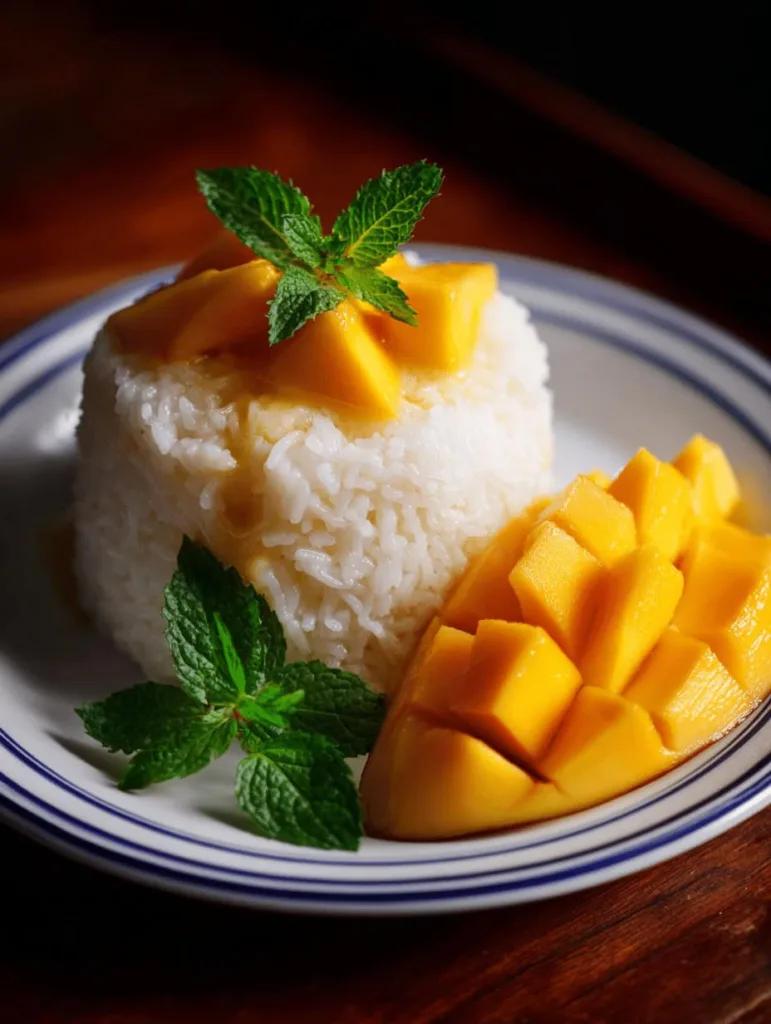
Step 7: Assemble and Serve Serve the coconut rice warm or at room temperature alongside the fresh mango slices. Drizzle with the coconut topping and garnish with toasted sesame seeds or mung beans if desired.
Helpful Tips
Selecting the right type of rice is essential for authentic Mango Sticky Rice. Thai sticky rice, also called glutinous rice or sweet rice, is different from regular jasmine rice and cannot be substituted successfully. Look for it in Asian grocery stores or online.
The quality of your mangoes will make or break this dessert. Choose mangoes that are ripe but still firm, with a sweet aroma and slight give when gently pressed. Popular varieties include Tommy Atkins, Kent, or the traditional Thai Nam Doc Mai if available.
When steaming the rice, ensure your steamer setup creates consistent steam without allowing water to directly contact the rice. If you don’t have a traditional steamer, you can create one using a large pot with a tight-fitting lid and a heat-proof bowl or colander.
The coconut milk quality matters significantly. Use full-fat canned coconut milk rather than light versions or carton coconut milk for the richest flavor and proper consistency.
Details
This traditional Thai dessert requires patience but rewards you with authentic flavors. The soaking time for the rice cannot be shortened, as it’s essential for proper texture development. However, you can prepare components ahead of time, making it perfect for entertaining.
The steaming process should be monitored carefully. Undercooked rice will be hard and grainy, while overcooked rice becomes mushy. The perfect sticky rice should be tender with individual grains that stick together when pressed.
Temperature control is crucial when making the coconut sauce. Too high heat can cause the coconut milk to separate or curdle. Keep the heat at medium-low and stir constantly for smooth results.
Notes
For best results, use a bamboo steamer if available, as it provides even heat distribution and prevents condensation from dripping onto the rice. If using a metal steamer, ensure the lid is wrapped with a clean kitchen towel to absorb excess moisture.
The cornstarch in the topping is optional but recommended as it prevents the coconut milk from separating and creates a beautiful glossy finish when drizzled over the dessert.
Mango Sticky Rice can be customized with different garnishes such as toasted coconut flakes, crushed peanuts, or a sprinkle of black sesame seeds for added texture and visual appeal.
Frequently Asked Questions
Can I use regular rice instead of sticky rice? No, regular rice cannot be substituted for sticky rice in this recipe. Thai sticky rice has a unique starch content that creates the characteristic chewy, cohesive texture essential to authentic Mango Sticky Rice.
How do I know when mangoes are perfectly ripe? Ripe mangoes should have a sweet, fruity aroma at the stem end, yield slightly to gentle pressure, and have smooth, unblemished skin. Avoid mangoes that are too soft or have dark spots.
Can I make this dessert ahead of time? Yes, you can prepare the coconut rice up to one day ahead and store it covered in the refrigerator. Bring it to room temperature before serving, and prepare fresh mango slices just before serving for the best texture and appearance.
Is Mango Sticky Rice gluten-free? Yes, despite its name, glutinous rice contains no gluten. The term “glutinous” refers to the sticky, glue-like consistency of the cooked rice, making this dessert naturally gluten-free.
What if I can’t find Thai sticky rice? Thai sticky rice is essential for authentic results. Check Asian grocery stores, specialty food stores, or order online. Sweet rice or glutinous rice are alternative names for the same product.
Storage Instructions
Leftover Mango Sticky Rice can be stored in the refrigerator for up to 2 days. Keep the coconut rice and mango slices in separate containers to maintain optimal texture. The coconut rice may firm up when chilled, so allow it to come to room temperature before serving, or gently warm it in the microwave for 10-15 seconds.
The coconut sauce can be stored separately and reheated gently if it solidifies. Fresh mango slices are best consumed within 24 hours for optimal flavor and texture.
For longer storage, you can freeze the prepared coconut rice for up to one month. Thaw overnight in the refrigerator and bring to room temperature before serving. Always use fresh mangoes rather than frozen for the best eating experience.
Conclusion
Mango Sticky Rice represents the perfect harmony of flavors and textures that Thai cuisine is famous for. This beloved dessert transforms simple, wholesome ingredients into something truly extraordinary. The creamy richness of coconut perfectly complements the natural sweetness of ripe mangoes, while the tender sticky rice provides a satisfying base that ties everything together.
Making authentic Mango Sticky Rice at home allows you to experience the joy of Thai cooking while creating lasting memories with family and friends. Whether served as the finale to a Thai-themed dinner party or enjoyed as a special afternoon treat, this dessert never fails to impress with its beautiful presentation and incredible flavor.
The key to success lies in using quality ingredients, particularly the Thai sticky rice and ripe mangoes, and taking time with each step of the process. With practice, you’ll master the art of creating this restaurant-quality dessert in your own kitchen, bringing a taste of Thailand to your table whenever the craving strikes.